
For many families exploring regenerative medicine, one of the first questions is whether stem cells have anything to offer in autism — and if so, why. It’s a fair question, and it deserves a careful, honest answer grounded in published research rather than promises.
This article walks through what autism is, why it is so difficult to define and diagnose, what the science says about inflammation and the immune system in some children with autism, and why researchers are studying whether mesenchymal stem cells (MSCs) might help. It also explains, plainly, what the clinical evidence does and does not yet show.
Understanding Autism: A Complex, Individual Condition
Autism spectrum disorder (ASD) is not a single condition with a single cause. It is a group of neurodevelopmental conditions that vary enormously from one person to the next in how they present, in language and cognitive ability, and in the other conditions that often accompany them. Researchers describe autism as a complex, heterogeneous condition with multiple contributing causes and developmental paths (1).
Its origins are multifactorial. Both genetic and environmental factors appear to contribute, and more than a hundred genes have been linked to autism — which is part of why no two profiles look quite the same (1).
This complexity is also why diagnosis is challenging. There is no blood test or brain scan that confirms autism. Diagnosis is made by trained clinicians observing behavior against defined criteria, such as persistent differences in social communication alongside restricted or repetitive patterns of behavior (1). Because presentations overlap with other conditions and vary widely by individual, age, and sex, an accurate diagnosis can take time and expertise.
Understanding this heterogeneity matters, because it means that what may be relevant for one child is not necessarily relevant for another.
The Immune and Inflammation Connection
One area of active scientific interest is the observation that a subset of children with autism shows signs of altered immune activity and inflammation.
Research examining brain tissue and cerebrospinal fluid has documented neuroinflammation and activation of the brain’s immune cells in some individuals with autism, along with distinctive patterns of inflammatory signaling molecules (2). Studies have also reported immune dysregulation and, in some children, gastrointestinal inflammation (3).
It is important to be precise here: these findings are not present in every child with autism. As one review of the field concluded, immune-mediated mechanisms may be specific to subsets of individuals — for example, those with concurrent immune conditions or particular symptom patterns — and it is these subgroups that researchers think are most relevant to immune-focused research (3). In other words, inflammation appears to be part of the picture for some children, not a universal feature of autism.
Why Researchers Are Studying Mesenchymal Stem Cells
This is where mesenchymal stem cells enter the conversation. MSCs are studied largely for their ability to help regulate inflammation and modulate immune activity: not by replacing tissue, but through the signaling molecules they release, including growth factors and cytokines (4). Umbilical cord tissue-derived MSCs, in particular, are studied for their low immunogenicity and their immune-modulating and anti-inflammatory properties (4,5).
The scientific rationale is straightforward: if inflammation and immune dysregulation contribute to symptoms in some children with autism, then cells with immune-modulating properties are worth investigating as a potential way to influence that biology. That rationale is the reason MSCs have become a focus of autism research.
Why the Type and Quality of Cells Matters
Not all mesenchymal stem cells are the same. MSC populations can vary in their measured potency and biological activity depending on their tissue source, the donor, and how they are processed.
Bone marrow or fat are types of adult tissue that can be used to obtain MSC, but they can also be obtained from afterbirth tissue, such as umbilical cord (6). MSC obtained from umbilical cord are not taken from embryos and involve no harm to mother or baby. An experienced, qualified laboratory will only collect umbilical cords after healthy, full-term births through a careful consent and screening process, in a sterile environment, and will process the cells under rigorous laboratory standards.
The donor also matters: MSC obtained from healthier, younger donors can be more biologically active than those from older donors. And among donors with similar characteristics, cells can also behave differently due to individual variation. Overall, MSC derived from umbilical cord tissue have been flagged as having great potential for therapy (5).
Umbilical Cord Blood and Umbilical Cord Tissue — Are They the Same?
Not all “umbilical cord” cell products are the same. Two very different things are frequently grouped together under the same banner:
- Umbilical cord blood is the blood collected from the cord and placenta after birth. It is a mixed population of mononuclear cells (predominantly blood-forming cells) and it is generally infused with minimal processing. It is not primarily composed of mesenchymal stem cells.
- Umbilical cord tissue MSCs are mesenchymal stromal cells isolated from the cord tissue itself. A commonly used tissue from umbilical cord is the Wharton’s Jelly. These MSC are expanded in a laboratory into a defined, characterized, dose-controlled cell product. These are the cells whose immune-modulating and anti-inflammatory properties are most studied.
What the clinical evidence actually shows
Earlier autism research in the early 2010s conducted trials using both UC blood and UC tissue (7), with varying results, but the difference between the two sources matters when interpreting the research.
A randomized, placebo-controlled, double-blind study of 180 children at Duke University, tested a single infusion of umbilical cord blood, and found no significant benefit over placebo on the primary or secondary measures (8). That is an important, well-conducted result. But it tested cord blood, not culture-expanded cord-tissue MSCs, so it does not directly measure umbilical cord tissue MSCs.
In a separate Duke phase I study, infusions of umbilical cord-tissue MSCs were found safe and feasible in young children with autism, and about half of the children showed improvement on at least two autism-specific measures (9). Because that study had no placebo group, the researchers were careful to state that it is uncertain whether those improvements were caused by the treatment.
Other clinical trials with umbilical cord tissue are ongoing, and while preliminary exploratory results are encouraging, there are limitations of the underlying evidence due to differences in where the cells came from, how they were prepared, the size of the dose given, and how many times patients actually received the treatment (7).
The takeaway message is this: MSC therapy for autism remains investigational. While short-term safety has been reasonably supported in early studies, effectiveness has not yet been established, and the decisive trials are still in progress (7,9). Researchers also continue to ask whether particular subgroups of children, such as those with an inflammatory profile, may be more likely to respond (3).
Families deserve to weigh this honestly: the biological rationale is real, the distinction between cell products is real, the early signals are of interest, and the definitive evidence is not yet in.
Making an Informed Decision
Choosing whether to explore stem cell therapy for a child with autism is a deeply personal decision, and an informed one starts with understanding the science honestly, including its limits.
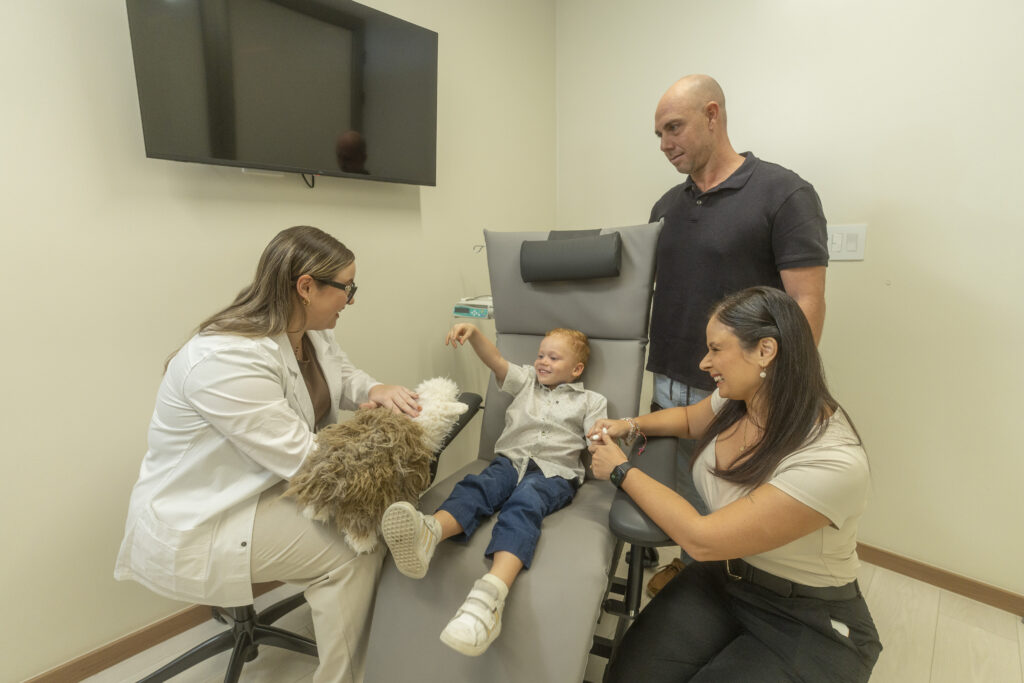
For more than 20 years, Stem Cell Institute has focused on regenerative medicine research and patient care, and its medical team has performed a large number of stem cell procedures. Its founder, Dr. Neil Riordan, has published more than 70 peer-reviewed scientific articles over his career. SCI is committed to collecting clinical outcomes data and responding to what that data shows – including pursuing publication of those findings and adapting its protocols as appropriate. Special lab processes are in place to identify the healthiest, most active umbilical cord cells to ensure the highest quality and effectiveness for treatment. This body of work reflects a commitment to studying these cells rigorously, which is the same spirit in which we encourage families to approach this decision: with good questions, realistic expectations, and the involvement of your child’s own medical team.
If you’d like to keep learning, our team is glad to help you understand the science and what is and isn’t currently known.
In addition to the published literature, the Stem Cell Institute systematically collects and analyzes clinical outcomes from children treated with umbilical cord tissue-derived mesenchymal stem cells using the Autism Treatment Evaluation Checklist (ATEC), a validated instrument that measures speech/language/communication, sociability, sensory/cognitive awareness, and health/physical/behavior. In an unpublished 12-month analysis of 230 patients, the average ATEC total score decreased from 72.6 at baseline to 56.7 at 12 months, representing a 15.9-point reduction. Improvements were observed across all four ATEC domains. While these observational findings have not yet undergone peer review and cannot establish causation, they provide important real-world clinical observations that complement the published clinical studies and support the need for continued prospective research.
This real-world clinical experience is also consistent with the safety profile reported in the published literature. Across more than 20,000 patients who have undergone more than 80,000 stem cell procedures, no serious adverse events have been reported. Among autism patients, adverse events were reported in approximately 5% of procedures, were generally mild, and most resolved within 24 hours. The most commonly reported adverse events included hyperactivity (1.8%), fever (0.9%), fatigue (0.9%), headache (0.5%), chills (0.4%), and pain or swelling at the infusion site (0.4%). While these observational safety data have not yet undergone peer review, they provide additional context regarding the tolerability of the Institute’s treatment protocols.
References
- Masi A, DeMayo MM, Glozier N, Guastella AJ. An overview of autism spectrum disorder, heterogeneity and treatment options. Neurosci Bull. 2017;33(2):183–193. doi:10.1007/s12264-017-0100-y. https://pubmed.ncbi.nlm.nih.gov/28213805/
- Ohja K, Gozal E, Fahnestock M, et al. Neuroimmunologic and Neurotrophic Interactions in Autism Spectrum Disorders: Relationship to Neuroinflammation. Neuromolecular Med. 2018;20(2):161-173. https://pmc.ncbi.nlm.nih.gov/articles/PMC5942347/
- Hafizi S, Tabatabaei D, Lai MC. Review of clinical studies targeting inflammatory pathways for individuals with autism. Front Psychiatry. 2019;10:849. doi:10.3389/fpsyt.2019.00849. https://pubmed.ncbi.nlm.nih.gov/31824351/
- Song N, Scholtemeijer M, Shah K. Mesenchymal stem cell immunomodulation: mechanisms and therapeutic potential. Trends Pharmacol Sci. 2020;41(9):653–664. doi:10.1016/j.tips.2020.06.009. https://pubmed.ncbi.nlm.nih.gov/32709406/
- Drobiova H, Sindhu S, Ahmad R, Haddad D, Al-Mulla F, Al Madhoun A. Wharton’s jelly mesenchymal stem cells: a concise review of their secretome and prospective clinical applications. Front Cell Dev Biol. 2023;11:1211217. doi:10.3389/fcell.2023.1211217
- Hass R, Kasper C, Böhm S, Jacobs R. Different populations and sources of human mesenchymal stem cells (MSC): A comparison of adult and neonatal tissue-derived MSC. Cell Commun Signal. 2011;9:12.. doi:10.1186/1478-811X-9-12
- Xu M, Zhang X, Liu Y, et al. Mesenchymal stem/stromal cell-based therapies for autism spectrum disorder: emerging evidence and clinical prospects. J Transl Med. 2026;24(1):609. doi:10.1186/s12967-026-08030-3 https://pmc.ncbi.nlm.nih.gov/articles/PMC13126740/
- Dawson G, Sun JM, Baker J, et al. A phase II randomized clinical trial of the safety and efficacy of intravenous umbilical cord blood infusion for treatment of children with autism spectrum disorder. J Pediatr. 2020;222:164–173.e5. doi:10.1016/j.jpeds.2020.03.011. https://pubmed.ncbi.nlm.nih.gov/32444220/ (This trial used umbilical cord blood, not culture-expanded cord-tissue MSCs.)
- Sun JM, Dawson G, Franz L, et al. Infusion of human umbilical cord tissue mesenchymal stromal cells in children with autism spectrum disorder. Stem Cells Transl Med. 2020;9(10):1137–1146. doi:10.1002/sctm.19-0434. https://pubmed.ncbi.nlm.nih.gov/32531111/ (Phase I, open-label study of cord-tissue MSCs; a placebo-controlled phase II is underway.)
This article is for educational purposes only and is not medical advice. Mesenchymal stem cell therapy is investigational for autism spectrum disorder and is not approved by the U.S. Food and Drug Administration as a treatment for autism. These statements have not been evaluated by the FDA, and this content is not intended to diagnose, treat, cure, or prevent any disease. Autism is a highly individual condition, and outcomes vary; no specific result should be expected or inferred. Decisions about a child’s care should always be made with the child’s qualified healthcare providers.