

Multiple Sclerosis (MS) is caused by an immune mediated attack targeting components of the myelin sheath. The myelin sheath is known to act as an “insulator” for neurons so that they can communicate properly with each other.
At present there are no FDA-approved treatments that specifically target the abnormal immune responses in MS. Current approaches, such as interferon, copaxone, or immune suppressants all act in a nonspecific manner blocking immune responses against the myelin sheath. While these approaches are useful for reducing the severity of disease, they do not repair the damage to nervous system tissue that has already occurred and therefore they cannot cure multiple sclerosis.
Mesenchymal stem cells (MSCs), have immune regulatory properties which may stop the immune system from attacking the myelin sheath.
Mesenchymal stem cells may also potentially help remyelination (re-generation of the myelin sheath) of the affected neurons.
We published results from our phase 1/2 clinical trial in the March, 2018 edition of the Journal of Translational Medicine. The name of the trial is “Clinical feasibility of umbilical cord tissue-derived mesenchymal stem cells in the treatment of multiple sclerosis“.
This study concluded that “…intravenous infusion of [Umbilical Cord Mesenchymal Stem Cells] UCMSC over several days is safe in subjects with MS. Additionally, UCMSC infusions may hold benefits, since this small study group saw improvement in bladder, bowel, and sexual dysfunction, walking, upper extremity physical function, energy and fatigue, general perspective of a positive health change and improved quality of life, and MRI lesions…”
In addition to our clinical trial findings, we have observed similar types of improvements in multiple sclerosis patients treated at our facilities over the past 13 years.
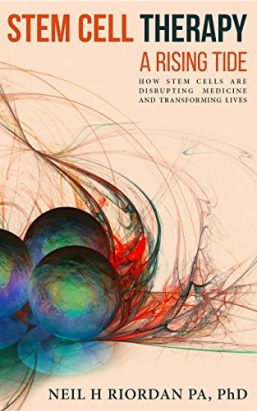
“Neil takes readers on a riveting journey through the past, present, and future of stem cell therapy. His well-researched, educational, and entertaining book could change your life. I highly recommend it.”
– Tony Robbins, NY Times #1 Bestselling Author
It gave me hope that there’s a light at the end of the tunnel.
No need to collect stem cells from the patient’s hip bone or fat under anesthesia, which can be an unpleasant ordeal.
There is a growing body of evidence showing that umbilical cord tissue-derived (HUCT) mesenchymal stem cells are more robust than mesenchymal stem cells from other sources.
No need to administer chemotherapy drugs like granulocyte-colony stimulating factor (G-CSF or GCSF) to stimulate the bone marrow to produce granulocytes and stem cells, and release them into the bloodstream.
Since HUCT mesenchymal stem cells are immune system privileged, cell rejection is not an issue and Human Leukocyte Antigen (HLA) matching is not necessary.
The stem cells with the best anti-inflammatory activity, immune modulating capacity, and ability to stimulate regeneration can be screened and selected.
Allogeneic stem cells can be administered multiple times over the course of days in uniform dosages that contain high cell counts.
Umbilical cord tissue provides an abundant supply of mesenchymal stem cells.
We use Golden Cells™. Years-long retrospective analysis of patient outcomes has enabled us to identify and select the best cells for use in our patients.

No stem cell product from any source, including the patient’s own, is approved by the US FDA to treat multiple sclerosis.
However, human umbilical cord tissue-derived mesenchymal stem cells that were isolated and grown in our laboratory in Panama to create master cell banks have been used in the United States under US FDA regulation.
These cells served as the starting material for cellular products used in MSC clinical trials for two Duchenne’s muscular dystrophy patients under US FDA’s designation of Investigational New Drug (IND) for single-patient compassionate use. (IND 16026 DMD Single Patient).
The body’s immune system is unable to recognize umbilical cord-derived mesenchymal stem cells as foreign, and therefore they are not rejected. Human umbilical cord tissue stem cells have been administered tens of thousands of times at the Stem Cell Institute, and there has never been a single instance of rejection (graft vs. host disease). As a matter of fact, allogeneic (not the patient’s own) mesenchymal stem cells are approved to treat graft vs. host disease in Canada and New Zealand.
Umbilical cord-derived mesenchymal stem cells also proliferate/differentiate more efficiently than “older” cells, such as those found in the fat, and therefore, they are considered to be more “potent”.
The adult stem cells used to treat Multiple Sclerosis at the Stem Cell Institute come from human umbilical cord tissue (allogeneic mesenchymal). These stem cells are expanded at Medistem Panama’s state-of-the-art laboratory.
The mesenchymal stem cells we use are recovered from donated umbilical cords following normal, healthy births. Each mother has her medical history screened and is tested for infectious diseases. Proper consent is received from each family prior to donation.
All umbilical cord-derived stem cells are screened for infectious diseases to International Blood Bank Standards before they are cleared for use in patients.
Only a small percentage of donated umbilical cords pass our rigorous screening process.
Proper follow-up is an essential part of stem cell therapy. Our primary goal is to ensure that you are progressing safely. Regular follow-up also enables us to evaluate efficacy and improve our treatment protocols based on observed outcomes.
Therefore, our medical staff will be contacting you after 1 month, 3 months, 6 months, 9 months, and 1 year to monitor your child’s progress.
You can apply today to find out if you are eligible for treatment. You may also contact us by telephone 1 (800) 980-7836 (toll-free in US) and 1 (954) 358-3382 (International).