Stem Cell Therapy for spinal cord injury: Theo Kostoulas

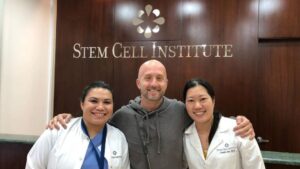
Theo Kostoulas is a T-6 complete spinal cord injury patient. He received a course of 16 stem cell therapy injections using umbilical cord-derived stem cells and his own bone marrow-derived stem cells. The cells were injected both intravenously and intrathecally (into the spinal fluid). During his stay in Panama and as part of his treatment protocol, Theo went to 19 physical therapy sessions over the course of month.

“I can definitely say that after the second injection, I immediately actually started getting some leg sensation and touch back from below my injury level. It was me lying in bed while my mother was putting my sock on my feet. I was actually able to feel that and it was pretty amazing because I haven’t had and feeling or sensation at all from my injury level of T-6. Now, more towards the end here, I have actually been able to have bladder sensation. I am a person that usually cath’ed myself every four hours but now because I do have this sensation coming back, I tend to wait until I have the need to have to go. So it can be anywhere from six to seven hours. If I need to drink a lot of water before coming to treatment, I know ahead of time whether I need to cath myself sooner or not.”

Stem Cell Therapy for Multiple Sclerosis: Kelley Wilson

April 17, 2013

Kelley Wilson Stem Cell Therapy for MSI grew up no stranger to Multiple Sclerosis as my father was diagnosed in 1970 at the age of 30 – I was in the 5th grade.

I watched my father deteriorate through the years progressing from walking with a cane, spring assist in his shoes to lift the toe, to hand crutches, his inability to control his bladder and bowels, to being permanently bound to a wheel chair by 1979. Building all sorts of ramps, elevators and installing van lifts so that he could be able to get around by himself. He is still alive and wearing out electric wheel chairs to this day.

I had a few problems with my eyes in 1981, which they tested me for MS knowing my father’s history, but everything at that time came up negative (no MRIs used at that time). I then had a problems with my eyes & speech (blurry & slurring – which dissipated that day) in the summer of 2003, which the doctors preliminary diagnosis was a mild stroke, but then the test began. The outcome came on November 10th, 2003 from my neurologists – you have MS. This just about devastated me having watched the progression (walking to not walking, loss of bowel & bladder control, and loss of mobility & arms, etc.).

Well, they started me on Betaseron, and then the fun began. The first nine (9) months on Betaseron was a roller-coaster of emotions, periods of not having any concentration, and not being able to remember how to do little things that I’ve done for twenty some-odd years. Thank “GOD” for my loving wife (Kim) for getting me through this time..

After making it through the first nine months, things settled, but the MS progressed. Legs burning, legs jerking, walking becoming difficult, hands trembling, lots of floaters in my eyes and twitching. Continued my appointments with my neurologists and as things progressed, more meds prescribed.

In April of 2009, they conducted more test including an Evoke Potential (hooked me up to electrodes and actually got me to levitate off of a table when the zapped me) and more MRIs, etc. These test resulted in a diagnosis of Myasthenia Gravis in conjunction with the MS. More meds prescribed.

In the fall of 2011, walking was very difficult, writing was a joke (if someone other than myself was reading it), having lots of bladder and bowel issues (everything seemed to be leaking) and if I had to travel with my job, I had be chauffeured, as I couldn’t make the trips by myself. Hot weather made me wilt like a cut flower out of water. With all of this going on with my body, the neurologists ordered up another batch of test and then concluded that Betaseron had out lived its effectiveness and I was changed to Copaxon.

After a month of Copaxon, I was having whelps and redness appear at the injections site, which I called the folks at Copaxon and my neurologists and explained what was happening. Both told me it just took a little while for my body to adjust and they would go away. Another month passed and I was doing the injections in my thigh, when the swelling and inflammation became so bad I couldn’t hardly put on my jeans and could hardly walk, so I marched down to my neurologists and sat in her office until she could see me. She took one look at the sites and said that I was allergic to Copaxon, and changed the meds to Avonex – oh joy. I had to undergo 21 days of steroid treatment prior to beginning Avonex.

It’s now February of 2012 and things are not getting any noticeably better, or slowing down, and I’m getting fed up and not looking forward to what I have seen with my father.. I keep taking the meds and start investigating my options.

A friend had mention to my wife about stem cell therapy that they had heard about down in Costa Rica. We researched it and found it in Panama, started checking it out and we liked what we read..

I submitted the initial applications in late March and received approval in April (just 7 days later). Just so happened that The Stem Cell Institute – Panama was having a seminar that month in Gilbert, AZ, so we signed up and flew to Phoenix (we wanted a little more comfort factor). We were very impressed & actually was able to talk with the doctors (Neil Riordan and Dr. Paz Rodriguez) and go over everything (also met one person that had been through the treatment that had a spinal cord injury, one that has MS and both where doing pretty good, as their stories were documented on film and a part of the presentation) .

The seminar was very good and we were sold on the fact that we had made the right decision. .

After arriving back home, we submitted for a treatment to get in the queue’ (which we were told would take as long as 5 months to find an opening), and received notification that it would be on May 14th, 2012, so we confirmed the reservations and began preparing for our trip.

At this time I had quit smoking and the current list of drugs was as follows:

  • Amantadine: 100mg (2 tablets in AM)
  • Effexor: 75mg (1 tablet daily)
  • Zanaflex: 4mg (1/2 in AM & 1 at night)
  • Plavix: 75mg (once daily)
  • Crestor: 5mg (1 tablet at night)
  • Mestinon: 60mg (1 tablet in 4 times daily)
  • Mirapex: 0.125 mg (30 minutes before bedtime)
  • Ampyra :10mg (1 tablet in am & 1 tablet in PM
  • Avonex: 30mcg injection (once a week)

A week prior to our trip to Panama I had a regularly schedule appointment with my neurologists and at the end of the office visit I informed her of my intentions of going to Panama. I did not receive any negative response, she just want to make sure of the procedure that was going to be conducted and where the stem cells were coming from. She also relayed that she was an investigator for stem cell research for the State of Texas.


Here’s a log of the adventure to Panama. Anxiety is high

5/13 (Sunday):
Flew to Panama from Amarillo. Left Amarillo at 9:30AM & arrived in Panama at 7:30PM (had a little trouble with my legs from Houston to Panama – spasms). We were met by Stem Cell Institute (SCI) representative at the airport & walked though customs, like you have never seen. Escorted through and express line at customs, escorted us to a lounge and then they went to go retrieve our luggage. SCI had transportation set up from the airport to your hotel, via private courier.

5/14 (Monday):
Picked up at the hotel by SCI and taken to the SCI office & met with 3 doctors and had blood taken (11 vials). All the doctors were great (Dr. Rodriguez, Dr, Hernandez and Dr. Bowen) and explained everything in great detail. Discussed the surgery (mini-liposuction the next morning). The stem cells were harvested from my own body – no umbilical cord cells utilized. SCI driver took us back to the hotel.

5/15 (Tuesday):
Picked up by SCI and taken to the hospital @ 8:00AM. A little anxious about the facilities that we were going to, but when we drove up the signage on the building read “Hospital Punta Pacifica, affiliated with John Hopkins Medicine International”.- no more worries. I was met at the door by Dr. Bowen (from Stem Cell), admitted to hospital and surgery @ 10:00am, out of surgery recovery by 12:15pm, given pain pills & antibiotics, Dr. Bowen was in surgery & with me throughout the procedure. The plastic surgeon that performed the procedure was from the States. SCI driver takes us back to the hotel. Took only one pain pill for the entire time. Have to wear a girdle (Velcro & elastic) for twenty-one days.

5/16 (Wednesday):
SCI picks us up at 9:30AM for 10:00am appointment for physical therapy. Stretching exercises and a small work out. Driver takes us back to hotel.

5/17 (Thursday):
Same as yesterday

5/18 (Friday):
Same as yesterday.

5/19 (Saturday):
Took a tour to the rainforest & the lake on the top of the canal. Saw, sloths, monkeys, butterflies coatis, toucan & crocodiles (all in the wild) – (gone 6 hours)

5/20 (Sunday):
Took a tour to the waterfall and zoo. (gone 7 hours)

5/21 (Monday): SCI picks us up at 9:30AM for 10:00am appointment for physical therapy. Last day of physical therapy. Diver takes us back to hotel. Kim found a casino at the Sheraton Inn & we went for a little while.

5/22 (Tuesday):
Took a tour through the Panama Canal Locks & up to the lake. We met a couple of others folks at the motel that evening that were down from the States to have the treatment. One gentleman had come down for his second set of treatments and was expounding as to how great his progress had been, and was hoping that with this set that he could be able to walk without a cane. His first set of treatments was about eight months prior. Ok, now I’m getting very anxious.

5/23 (Wednesday):
SCI picks us up at 9:30AM for 10:00am appointment to receive 1st infusion of stem cells. Received 20cc which took about 15 minutes, once I got back to the examination room. . Driver took me back to the hotel – back before 10:30AM. After lunch, Kim asked if I was feeling any effect from the first treatment and I barked back that it takes months for the effects to take place (sorry that I made that comment). Kim had inquired and found another casino, so we took a trip to the Wyndum Casino. After about 2 hours (at about 8:00PM) I noticed that I wasn’t limping, or staggering, dragging my foot, or any of that other good stuff – I went to find Kim. Found Kim & asked her what she thought about my walking and she was really surprised.

5/24 (Thursday):
SCI picks us up at 10:15AM for 10:30am appointment to receive 2nd infusion of stem cells. Told the Dr. (Randy Bowen) about my walking and he was very surprised. I also relayed that the floaties that I have had in my eyes are diminishing, the tingling in my hands is diminishing & my feet don’t feel like they are on fire, bladder control is doing better. Driver took me back to the hotel. Had lunch and then started just messing around and found that I could balance on one leg (either leg) with my hands in my pockets (been quite a while since I was able to balance like that, even without my hands in my pockets) Went to the casino for a little while.

5/25 (Friday):
SCI picks us up at 9:30AM for 10:00am appointment to receive 3rd infusion of stem cells from the Dr. (Hernandez) & he said that he had heard from Dr. Bowen about my results, so I showed him the balance act which he was very impressed with. Both He & Dr. Bowen stated that I was fortunate to have results so quickly, but should continue receiving more results up to at least 6 months. They asked that I keep them apprised of any and all progress. Received pack of documentation covering everything that was done by SCI (complete blood analysis & certification of 6.6*E7 >75% viable stem cells). They also apprised me that they have retained 50% of the stem cells harvested for utilization at a future date – which is only a one week trip. Dr. Hernandez said that I could start decreasing my medications gradually. (Driver took me back to the hotel. Off we go to the Wynndum Casino for a couple of hours. Walking is getting better.

5/26 (Saturday):
Tired today, slept until 11:45AM, then went to grab lunch, laid back down at 1:30PM and slept until 4:30PM. Went and grabbed a few beers at the hotels bar. I haven’t been able to walk, or see like this in 6 years.

5/27 (Sunday):
SCI Driver pick us up at 7:00AM and assisted through the line at the airport. Arrived back in Amarillo at 8:00PM. Had a little trouble with my legs (Spasms) from Houston to Amarillo, but nothing like it had been for the past 5 years.

5/28 (Monday):
Went to the shop & office – didn’t do much. Had supper with our daughters and they couldn’t believe how I was walking. My wife insisted that I show them the balancing act. Girdle & levis, don’t go together very well.

The facilities and doctors are really great. Very professional, very clean, very informative and they help you with anything that you need.


With the results that I was seeing in the first week, I stopped taking a lot of my meds.

On June 16th we took a trip and drove to Ft. Smith, AR (444 miles) to attend a barbeque cook for my friends. Amazingly I had no spasms or leg jerks on the trip over or back, and I tolerated the heat exceedingly well. The only meds that I was still taking at this juncture was Zanaflex and Effexor.

In mid-July I was sleeping like a rock and awakening maybe just once an evening. No more one hour sleeps and then run to the bathroom – no more leg jerks – no more spasms. I had also traveled to one my friends ranch and was out in +97° weather and had no problems.

The first part of August, Kim had purchased a guided fly fishing float trip in Oregon. Ok, now I’m a little skeptical, but here I go. We fished for five days out of boats, floating down the rivers with fly rods. You had to stand up in the boats that were moving with the currents and going through rough water. Amazingly, I never lost my balance. Life is good. Completely off of ALL meds.

After arriving back from Oregon, I had a scheduled appointment with my neurologist. I informed her that I was totally off all of my meds, which she raised an eyebrow upon, then she ran me through the paces for balance, strength, eyes, and walking. She seemed impressed but didn’t say a whole lot, but what she said I really loved. I was discharged from all follow-ups and associated test until such time as I felt that I needed to see her.

The Stem Cell Institute still calls periodically (and sends questionnaires) to check on my conditions and inquire if I need anything additional, which is great. I have very few doctors, or clinics, that have ever called to check on me.

At the writing of this, I am one month from my one year anniversary of the treatment and I cannot express what a change in life it has been. I’m no longer in pain. I’m not irritable. I’m happy. I can walk. I don’t have to worry where the restrooms are located. I can jog (if I wanted too). I can work outside in the summer. My family and friends are astonished with my progress. It is like you rolled the life clock back twenty years.

If this procedure was available fifteen years ago, my father would not have had a say. I would have loaded him on a plane and he would have gone to Panama,

I strongly recommend this procedure and The Stem Cell Institute. They and their staff treat you like a king and you become part of their family. It is life changing Thank “GOD” for the pioneers in medicine.

Anyone reading this that would like to discuss my progress, or any of the above, may feel free to contact me at (Number available upon request to all approved applicants).

Sincerely,

Kelley R. Wilson.

Stem Cell Treatments for Rheumatoid Arthritis – Arminda Bourin

Arminda Bourin has suffered from rheumatoid arthritis since 2003. She underwent adult stem cell therapy at the Stem Cell Institute in February 2012 because her swollen, painful ankles made it very difficult for her to walk. This interview takes place approximately one year after treatment.

Before coming to Panama, Ms. Bourin tried everything from anti-inflammatory and auto-immune medication to homeopathy and finally surgery on her left ankle, “Which I regret because if I had waited [until after the stem cell therapy], it would not have been necessary. The other foot with the same symptoms is now better without any surgery. I think it was the stem cells.”

Ms. Bourin learned about the Stem Cell Institute from her husband’s cousin, Judi Lecoq. Judy received treatment for multiple sclerosis and, “…told us how wonderful the treatment was and that she was so much better.”

Regarding the doctors, staff and clinic, “They are wonderful. Everybody has been so kind.”

Upon being asked, “Has this treatment changed your life?” Ms. Bourin responded, “Well, yes. I was not walking too much. I needed a wheelchair. It was painful anyway. So to be able to go shopping, that’s a miracle!”

Stem Cell Treatments for Cerebral Palsy – Mary Washington’s Story

Sarah Washington and her daughter Mary. Mary is 2 years old and was diagnosed with cerebral palsy when she was 4 months old. She was first treated at the Stem Cell Institute in Panama using human umbilical cord-derived stem cells. Mary received these stem cells intravenously over the course of 4 days. Her first treatment was in September of 2012. This interview was recorded in March 2013 at the clinic while she was there for a second round of treatments.

What kind of improvements have you noticed?

Overall, in general, what we noticed was, her upper body, she’s very stiff. She’s spastic in her legs and her arms and she has low tone in her trunk. In her upper body, we noticed a pretty significant improvement. Her range of motion, she couldn’t lift her arms over her before and now she can do that on both sides easily. And her hands, she was in tight little fists most of the time, whereas now if she is in a fist it’s very loose. But most of the time she kind of has her hands relaxed. That was a big improvement for us; small but significant for our family.

Her vision has improved, not necessarily distance but as far as like what I think as seeing details. So she would be able to tell the difference between you and me if we didn’t say anything. Whereas before, I don’t think she could do that. She would rely on smell and hearing more than her vision. Now she uses her vision a lot more. So that’s been an improvement that we’ve seen.
She is more involved in the world around her. [She] wants to be more involved in the world around her so that’s good. She has definitely, she doesn’t say, “mama, dada, ba, ba” yet but she definitely is making more vocalizations, making more sounds and trying to experiment with her voice, which is a positive thing.

She is trying different ways of communicating versus just screaming which is what she did before because that is all she knew how to do. And now, she is kind of fussing or sometimes she’ll just kind of like, yell and stop and wait for me to answer her instead of just going from “zero” to “scream”. So her communication has improved as well.

One thing that we were not expecting that we were pleased about is an improvement in her seizures. That wasn’t even something that we had even, I don’t know. I guess it just didn’t occur to us that maybe this would be helpful with that but before we came the first time in September she had been sick and we actually had to delay our trip twice because she had bronchialitis. She was just having a really hard time. And she was having a lot of seizures. We had to add a new seizure medicine to try to get them under control and she was having 6 or 7 short myotonic jerks every day. The first time we were here, by about Thursday, which was like day three of treatment, of stem cells we noticed that she hadn’t had a seizure that day. Whereas before, she was having 6 or 7 a day. And so, that was one thing. It was surprising but it was a nice surprise that those have improved since we’ve been here. She will still have breakthrough seizures every now and then when she’s sick, teething but she, we haven’t gone back to that, where she was having them on a regular basis. So that’s good. That’s been a good improvement.

Since we’ve been here this time, I haven’t really seen anything where I could say, “Oh, I think that’s the stem cells.” yet but I do know that last time it did take a couple of weeks for us to notice, you know, or to really pinpoint and say, “Yes, we think that is the stem cells. There’s no way she could have done that before.” So, and all of our therapists agree that her range of motion and her upper body for sure, and her vision would not have been the way they were without coming here.

Jorge Paz MD: Adult Stem Cell Therapy for Arthritis, Sports Injury, and Autoimmune Disease || 3 of 3

Stem cell therapy for osteoarthritis using adipose (fat) stem cell. Case study of 76 year-old man with osteoarthritis in his knees. Stromal vasular fraction treatment statistics including side effects collected over 800 infusions. Stem cell treatments for sports injuries and why pro sports stars are seeking treatment. Case study of a professional dancer with knee and neck problems who returned to competition after stem cell treatment in Panama.

Stem cell treatment in Panama benefits autistic Glenburn youth

Autism Stem Cell Patient Ken Kelley

As Kenny Kelley of Glenburn awaits an infusion of adult stem cells at a Panamanian city in November 2011, a Panamanian physician holds two syringes containing the cells. Autistic since birth, Kenny has undergone several such infusions since 2009.

As Kenny Kelley of Glenburn awaits an infusion of adult stem cells at a Panamanian city in November 2011, a Panamanian physician holds two syringes containing the cells. Autistic since birth, Kenny has undergone several such infusions since 2009.[/caption]

By Dale McGarrigle, Of The Weekly Staff
Bangor Daily News
Posted Sept. 14, 2012, at 12:17 p.m.

GLENBURN — Now Kenny can read.

Kenny Kelley can now also do many things that other 11-year-olds take for granted. According to his mother, Marty Kelley, that’s because injections of adult stem cells, taken from umbilical cord blood, have helped Kenny to shake off the shackles of autism, with which he was first diagnosed at age 2.

“The results from stem cells can be seen everyday in his amazing thoughts and vast imagination!!,” Marty Kelley wrote in her blog, http://www.kensjourneytorecovery.blogspot.com/. “How lucky we are for such a miracle treatment!”

Autism is a brain disorder found in children that interferes with their ability to communicate and relate to other people. Autism affects 1 in 88 children and 1 in 54 boys. What causes autism has not been established.

Stem cells are the body’s internal repair system and can fix and replace damaged tissue. These unspecialized cells are a blank slate, capable of transforming into muscle cells, blood cells, and brain cells. Stem cells can also renew themselves by dividing and giving rise to more stem cells.

Stem cells taken from umbilical cord blood, such as Kenny received, are the least likely to be rejected.

The stem-cell treatment is the latest effort by Marty and her husband, Donald, to find ways to improve Kenny’s life. The Kelleys also have two other children: Philip, 13, and Caroline-Grace, 6.

First was in-home treatment in a mild hyperbaric oxygen chamber, three hours a day equaling 800 hours over the course of two years, beginning when Kenny was 5 ½ to 6 years old. This was coupled with a Specific Carbohydrate Diet, which restricts the use of complex carbohydrates and eliminates refined sugar and all grains and starch from the diet.

“We saw results right away with the chamber,” Marty recalled in a recent interview. “He made slow gains, such as tracing the alphabet.”

Then the Kelleys discovered on the Internet the story of Matthew Faiella, a New York boy who has been making great strides after stem-cell treatment in Panama for his autism. They decided to follow suit.

Why take this path, when there has been little scientific research into the use of stem cells to treat autism?

“We were willing to do it as long as it’s safe, and I’ve researched this,” Marty said. “Stem cells are very natural. I’m not a scientist, but I care much more than any scientist would, and I would never do anything to hurt my baby.”

When Kenny went for his first stem-cell treatment in July 2009, at the Stem Cell Institute in Costa Rica, Marty assessed the condition of her then 8-year-old son in her blog http://www.kensjourneytorecovery.blogspot.com:

• Behavior: Screaming, aggressive, giggles/silly/inappropriate with his brother or new people, running around, destructive, uncooperative while being dressed, hitting, not potty trained (still wearing diapers).

• Speech: Vocabulary of a 4-year-old. He can talk, but it is difficult for strangers to understand him. Answers some questions, but he does not understand or like why, when, or how questions.

• Physical: A body the size of a 5-year-old boy.

Kenny has had stem-cell treatments in 2009, 2010, and May and November of 2011. The repeated treatments are required because adult stems cells will work repairing cells for a period of time, about six months, then leave the body.

“When I think I’ve seen his skills level out, we’ll go for another treatment,” explained Marty.

What are some of the changes that Kenny has undergone in the past three years? First came the ability to read and clearer speech.

“When he got back, he just picked up a book and started reading, and I could understand every word,” said Mike Hughes, Marty’s brother. “It was like a light just turned on.”

Other gains: Kenny is talking about past events for the first time, and he’s conversational now. He expresses opinions and looking ahead to the future. He was finally potty trained at age 9. He’s doing math now. He’s calmed down considerably. This summer, he went to summer camp, staying overnight for three nights, in the same cabin as Philip.

“There’s no doubt in my mind how much he’s progressing,” Marty said. “We’re working on catching up right now, and how do we best do that?”

The costly treatment, which isn’t covered by insurance, hasn’t been approved yet by the Food and Drug Administration. Despite the fact that the stem cells come from the human body, the cells are considered a new drug by the FDA and are subject to stringent research and testing that can take years.

So this leaves the Kelleys and others like them seeking stem-cell treatment, going overseas to get it.

“It’s just a matter of how much are you going to spend,” Marty said. “There’s no treatment here that was going to do this much for him.”

Mesenchymal Stem Cells Stop Arthritis in its Tracks – Duke University

Researchers at Duke University announced a promising new stem cell therapy aimed at osteoarthritis prevention after a joint injury.

The probability of developing arthritis after injury (post-traumatic arthritis – PTA) greatly increases after injury. Currently, the US FDA has not approved any drugs that slow or eliminate the progression of PTA.

However, at Duke researchers are beginning to confirm mesenchmal stem cell (MSCs) therapy in arthritis treatment. The treatment is similar to that which professional athletes and others have been seeking abroad in places like Panama and Germany for the past few years.

Ref: Pro/Am Dancer is “Dancing with the Stars” Again After Stem Cell Therapy in Panama

In the study, mice sustaining fractures that commonly lead to arthritis were treated with MSCs. “The stem cells were able to prevent post-traumatic arthritis,” said Farshid Guilak, Ph.D., director of orthopaedic research at Duke and senior author of the study.

The study was published on August 10 in Cell Transplantation.

Lead author Brian Diekman, Ph.D said the scientists observed markers of inflammation and noted that the stem cells affected the joint’s inflammatory environment following injury.

“The stem cells changed the levels of certain immune factors, called cytokines, and altered the bone healing response,” stated Diekman.

The Duke team used mesenchymal stem cells isolated from bone marrow. Bone marrow stem cells are very rare; making isolation difficult and requiring that the isolated cells be cultured in the lab under low-oxygen conditions.

“We found that by placing the stem cells into low-oxygen conditions, they would grow more rapidly in culture so that we could deliver enough of them to make a difference therapeutically,” Diekman said.

A richer source of mesenchymal cells is adipose (fat) tissue. Therapeutic doses of MSCs are routinely harvested from fat tissue and do not require culturing in the lab. However, it does takes 5 five days to thoroughly test the adipose cell samples for aerobic bacteria, anaerobic bacteria and endotoxins.

Ref: Stem Cell Therapy for Osteoarthritis

Medistem Signs Exclusive Worldwide License With Yale University for Treatment of Type 1 Diabetes Using Stem Cells

Acquisition of Intellectual Property and Data Leads to Expansion of Medistem Therapeutic Pipeline

SAN DIEGO, CA, Mar 07, 2012 (MARKETWIRE via COMTEX) — Medistem Inc. (pinksheets:MEDS) and Yale University have signed an exclusive worldwide licensing agreement covering the generation of pancreatic islets from stem cells such as the Endometrial Regenerative Cell (ERC). These pancreatic islets have effectively treated diabetes in animal models.

Professor Hugh Taylor of Yale University, inventor of the technology, made international headlines in September 2011 when he published his findings in the peer-reviewed journal Molecular Therapy.

“Medistem is the first company to develop clinical-grade endometrial-derived stem cells and initiate trials in humans,” said Professor Taylor. “Since Medistem’s Endometrial Regenerative Cells are manufactured inexpensively, can be used as an ‘off the shelf’ product, and to date appear safe in human subjects, I am very excited to see diabetes added to the list of diseases that can potentially be treated with Medistem’s ERCs.”

Medistem is currently in two clinical trials with ERCs: One for critical limb ischemia and a second for congestive heart failure, both of which are complications of uncontrolled diabetes.

“Type 1 diabetes is a rapidly growing poorly-served market. There is great optimism that cell-based therapies can address not only pancreatic degeneration but also the underlying immunological causes,” said Dr. Alan Lewis, former CEO of the Juvenile Diabetes Research Foundation, the largest non-profit organization focused on development of new therapeutic approaches for this disease. “The ERC is the newest adult stem cell to enter clinical trials. Based on this unique source of cells, as well as their immune modulatory properties, we believe this work may be expanded into other autoimmune diseases.”

About Medistem Inc. Medistem Inc. is a biotechnology company developing technologies related to adult stem cell extraction, manipulation, and use for treating inflammatory and degenerative diseases. The company’s lead product, the endometrial regenerative cell (ERC), is a “universal donor” stem cell being developed for critical limb ischemia and congestive heart failure. A publication describing the support for use of ERC for this condition may be found at http://www.translational-medicine.com/content/pdf/1479-5876-6-45.pdf . ERC can be purchased for scientific use through Medistem’s collaborator, General Biotechnology http://www.gnrlbiotech.com/?page=catalog_endometrial_regenerative_cells .

Cautionary Statement This press release does not constitute an offer to sell or a solicitation of an offer to buy any of our securities. This press release may contain certain forward-looking statements within the meaning of Section 27A of the Securities Act of 1933, as amended, and Section 21E of the Securities Exchange Act of 1934, as amended. Forward-looking statements are inherently subject to risks and uncertainties, some of which cannot be predicted or quantified. Future events and actual results could differ materially from those set forth in, contemplated by, or underlying the forward-looking information. Factors which may cause actual results to differ from our forward-looking statements are discussed in our Form 10-K for the year ended December 31, 2007 as filed with the Securities and Exchange Commission.

Panamanian-US Scientific Research Supports Using Fat Stem Cells to Treat Rheumatoid Arthritis

Dallas, TX (PRWEB) February 21, 2012

A Panamanian-led, multidisciplinary research team has published the first description of non-expanded fat stem cells in the treatment of rheumatoid arthritis patients. “Autologous Stromal Vascular Fraction Therapy for Rheumatoid Arthritis: Rationale and Clinical Safety,” which appears in the January publication of the International Archives of Medicine, followed 13 rheumatoid arthritis patients who were treated with their own fat-derived stem cells.

Treating arthritis with fat-derived stem cells has become commonplace in veterinary medicine over the past five years with over 7,000 horses and dogs treated by publication contributor Vet-Stem, a San Diego-based company. The objective of the joint Panamanian-US study was to determine feasibility of translating Vet-Stem’s successful animal results into human patients.

Observing no treatment associated adverse reactions after one year, the team concluded that its protocol should be studied further to determine efficacy in the treatment of rheumatoid arthritis. Their publication details the rationale for the use of fat derived stem cells in treatment of autoimmune conditions and is freely available at: http://www.intarchmed.com/content/pdf/1755-7682-5-5.pdf

“Key to advancement of any medical protocol is transparent disclosure of rationale, treatment procedures and outcomes to the research community in a peer-reviewed and IRB-compliant manner,” said Dr. Jorge Paz Rodriguez, Medical Director of the Stem Cell Institute and research team leader. “While we have previously published case studies on the use of fat stem cells in multiple sclerosis patients, and one rheumatoid arthritis patient, this is the first time that comprehensive follow-up has been completed for a larger cohort of patients,” he added.

An important distinction that separates this particular approach from those which are being explored by several international investigators is that the fat stem cells were not grown in a laboratory, affording a substantially higher level of safety and protocol practicality.

“This work signifies Panama’s emergence into the burgeoning field of translational medicine,” commented Dr. Ruben Berrocal Timmons, the Panamanian Secretary of Science and publication co-author. “We are proud to have attracted and collaborated with internationally-renowned stem cell clinical researchers such as Dr. Michael Murphy and Dr. Keith March from the Indiana University School of Medicine Center for Vascular Biology and Medicine, Dr. Boris Minev from the University of California, San Diego Moores Cancer Center, Dr. Chien Shing Chen from Loma Linda University Behavioral Medicine Center and Dr. Bob Harman from Vet-Stem. By leveraging their vast, collective clinical experience with Panamanian scientific infrastructure and know-how, we are striving to develop effective, internationally recognized stem cell procedures that will be accepted the world over.”

The treatment procedure involves a mini-liposuction, collection of the fat’s cellular component, processing to obtain a population of cells that includes stem cells, freezing the cells in preparation for quality control, and subsequent re-administration of the cells into patients.

The Panamanian-US group has previously shown that there is a specific type of T cell, called the T regulatory cell, associated with fat stem cells, which is capable of suppressing pathological immunity. Their current theory, which is described in detail in the publication: http://www.ncbi.nlm.nih.gov/pubmed/20537320, is that the T regulatory component of the fat is capable of slowing down or suppressing the “autoimmune” reaction, while the stem cell component causes formation of new tissue to replace the damaged joints.

About the Stem Cell Institute
Founded in 2006 on the principles of providing unbiased, scientifically-sound treatment options, the Stem Cell Institute has matured into the world’s leading adult stem cell therapy and research center. In close collaboration with universities and physicians world-wide, the institute’s doctors treat carefully selected patients with spinal cord injury, osteoarthritis, heart disease, multiple sclerosis, rheumatoid arthritis and other autoimmune diseases. Doctors at The Stem Cell Institute have treated over 1000 patients to-date.

For more information on stem cell therapy:

Stem Cell Institute Web Site: http://www.cellmedicine.com
Facebook: http://www.facebook.com/stemcellinstitute
Blogger: http://www.adult-stem-cell-therapy.blogspot.com

Stem Cell Institute
Via Israel & Calle 66
Pacifica Plaza Office #2A
San Francisco, Panama
Republic of Panama

Phone: +1 800 980-STEM (7836) (USA Toll-free) +1 954 636-3390 (from outside USA)
Fax: +1 866 775-3951 (USA Toll-free) +1 775 887-1194 (from outside USA)

Twins’ family coping with cerebral palsy

ASHLAND — Three-year-old twins with cerebral palsy are making life adventurous, challenging and bittersweet for the Hancock family.

“They’re happy kids but it definitely makes it more difficult because as a parent you want them to have every opportunity that every other child has,” said mother Carrie Hancock. “It’s hard, but we’re handling it the best we can.”

Because they were born 10 weeks premature, both children suffered developmental delays.

By the time Tessa and Dylan were 20 months old, Tessa had been diagnosed with cerebral palsy, a permanent disorder that affects movement and posture. At that time, parents Carrie and Jeremy were getting ready to take their daughter overseas for a stem cell transplant, a procedure that would allow Tessa to live a better, less physically restricted life.

In the midst of their planning, the family was soon faced with another obstacle. That January, Dylan also was diagnosed with cerebral palsy.

“What do you do? They’re your babies. You just go with it and do what you think is best,” Carrie said. “Before, we were always told that he just had developmental delays, but as much as you hated to hear it, it was almost a blessing because we were paying out of pocket for him because he hadn’t been officially diagnosed.

“That’s the silver lining I guess and now we’re able to get him the help he needs.”

The Ashland family ended up taking Tessa to Panama City, Panama, where she had her first round of stem cell treatments in 2009.

“She did really well and had a lot of improvement with her vision,” Carrie said. “Her tone in her hand had decreased and she wasn’t fisting all the time. When we went back in July, we took both the kids.”

The results were remarkable.

“As soon as we took him, he was like a whole other kid,” Carrie said of Dylan. “He was babbling and it helped him in so many different ways. He also just walked independently a couple months ago. For Tessa, it made her stronger. She was already smart and attentive.”

Today the twins attend therapy sessions at MedCentral Pediatric Therapy one day a week and preschool at Tri-County Preschool four days a week. They receive occupational, speech and physical therapy.

“A typical day for us includes them going to school a little after 8 and they’re picked up a little after 11,” Carrie said. “After we get them home and fed, Tessa goes down for a nap and then Dylan stays awake and I get alone time with him, which is nice. We work on walking and sitting up with them, but try to incorporate it into their play. We try to make it a fun time.”

The family takes the twins on outings by stroller and enjoy their play time together, but each day can be daunting.

“The biggest difference is the physical challenge of dressing and feeding. Tessa is in the process of being potty trained, but Dylan doesn’t want to yet,” Carrie said. “She can’t feed herself and we’re still changing diapers at age 3.

“Dylan’s not walking. If you ask him to pick up something, he doesn’t understand. It’s challenging.”

Recently, Dan and Stephanie Kreisher, of Ontario, held their third fundraiser for the family. Jeremy was on Dan’s 1994 state championship baseball team at Ontario High School.

The Kreishers and friends raised $1,400 for the Hancocks, along with providing them two iPads for Tessa and Dylan after learning the electronics would help their communication skills. The iPads were sponsored by Elite Excavating and Zara Construction.

“We have so much and are so fortunate that we wanted to help others,” Dan said. “Jeremy and Carrie are such positive people. They’re the happiest parents, just very admirable people.”

The feeling was mutual.

“I can’t say enough about Dan and Stephanie. The iPads are huge for us. We’re in the process of getting different communication devices to help with fine motor skills,” Carrie said. “They use them in school and it’s nice to be able to incorporate what they’re learning at home. Life isn’t easy, but we are very blessed.

“The best way to describe our family is that we’re taking the scenic route. We’re taking the back roads. We’ll get them there, but it just might take a little longer.”