Stem cell treatments for spinal cord injury: Daniel Campbell

After stem cell therapy at the Stem Cell Institute in Panama, C-6 incomplete spinal cord injury patient, Daniel Campbell describes how his condition has improved since his first treatment. Daniel is in Panama for his second treatment during this recording

“…The trajectory of my recovery drastically took an upward turn. I got grip back, got a lot stronger and my blood pressure issue sort of went out the window. My lower back started firing so when I lean back in my chair, I don’t just fall.

Most recently my hip flexors started firing in certain positions so I can assist the therapist while crawling. Bowel and bladder sensation has gotten better. I have hot and cold sensation in my hands now. Incontinence is a thing of the past.

Multiple Sclerosis Radio – “Stem cells are your body’s natural healing mechanism” – Neil Riordan PhD

For anyone who missed Dr. Riordan’s talk on MS Radio yesterday, below is a link to the replay. Did you know that by age 30, 96% of the mesenchymal stem cells are gone from a person’s bone marrow? Why is MS a disease of the immune system? How can an automated machine analyze a sample of lecithin and buffer that contains no cells and show that it contains 10 million cells per ml? Tune in for these and more.

REPLAY: “Stem cells are your body’s natural healing mechanism” – Neil Riordan PhD

TODAY ON MULTIPLE SCLEROSIS RADIO!
Dr. Neil Riordan, Founder of Stem Cell Institute
Tuesday Feb 5, 2013 at 2 pm EST.

LISTEN ONLINE: Multiple Sclerosis Radio

or call in Join Us LIVE On Air
(347) 327-9317
or Toll-Free
(877) 497-9936

http://www.blogtalkradio.com/msradio/2013/02/05/stem-cells-your-bodys-natural-healing-mechanism-stem-kine-1

Stem cell treatments for multiple sclerosis: Preston Walker

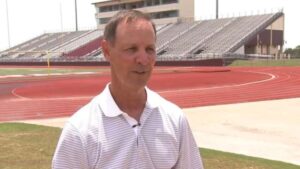
MS Stem Cell Patient Preston Walker

Preston Walker

A Different Approach

Sergeant Preston Walker
Courtesy Sergeant Preston Walker

After undergoing conventional therapy for MS for several years, Fort Worth police sergeant Preston Walker learned about a new treatment for autoimmune disorders. Researchers were utilizing adult stem cells derived from cord blood at The Institute of Cellular Medicine in Costa Rica. Walker inquired about the potential of the treatment for multiple sclerosis.

“We knew that if the treatment worked, the potential benefits for multiple sclerosis patients could be limitless,” says Walker.

Dr. Neil Riordan, CEO of the Institute, suggested a therapy under consideration – using stem cells derived from a patient’s fat tissue. In May 2008, Walker flew to the clinic where doctors removed samples of his abdominal fat through a mini-liposuction, drawing out stem cells, which were later re-injected. According to Dr. Riordan, Walker and a colleague were the first to undergo this treatment protocol. “My quality of life has improved significantly,” Walker told the Post. “The problems with depression, fatigue, and balance have been corrected. I feel really good.”

In June 2009, Walker, who continues to take Avonex as a maintenance drug, plans a return trip to Costa Rica for a “tune-up,” as he puts it. “I’m curious to see if they can further improve my cognitive abilities.”

Fox 4 News: A Fort Worth police officer has returned from Central America after having a cutting edge medical procedure to help cure his multiple sclerosis. Last year we told you about Sergeant Preston Walker tonight Larry Barriger updates us on how he is feeling following his stem cell transplant.

Sergeant Preston Walker has always been active. With a demanding job at the Fort Worth Police Department, a wife, and young children, he doesn’t have time to slow down. But about 8 years ago he didn’t have a choice. MS started taking a toll making him limp when he walked, fatigue easily, even everyday conversation was a chore.

“I can sit here and talk but trying to come up with actual words to say and really construct a sentence that people would understand was sometimes very difficult.”

Medicine helped keep the disease in remission but Preston wanted more. A chance for a cure.

“I wasn’t prepared to just let it stay in remission without me trying to do something, especially if there is an option out there to address it.”

Sergeant Walker was initially planning to have his treatment done in China but he says the political situation seemed unstable, so he started looking online. He found another center that was doing adult stem cell treatment in Central America.

The procedure, a stem cell transplant was expensive but last October police officers from Fort Worth and Dallas teamed up to help raise money for the trip and the treatment. Last March Preston and fellow MS patient Richard Humphries flew to the Institute for Cellular Medicine, both underwent a stem cell transplant, a cutting edge medical procedure not approved in the US. Both took a risk on such a new treatment, both said they have seen marked improvement.

“I haven’t felt this good in 10 years. I don’t have any of the fatigue issues, all of the cognitive lack of clarity, that cloud has been lifted.”

Walker says doctors at the Institute will be keeping up with him and Richard over the coming months and years to determine how successful the treatment was. He is hoping his improvements last and that the research leads to a cure for his and other’s multiple sclerosis.

It seems like a pretty simple task for a police officer just sitting and working on a computer. Just a couple of years ago, multiple sclerosis made that almost impossible for Fortworth Police Officer Preston Walker. New at 6 CBS 11’s Joe Thomas says Walker credits friends for recovery some feel is a miracle.

A year ago Preston Walker did not think he’d still be in uniform. Walker found out he has multiple sclerosis. He suffered chronic fatigue and began losing use of his legs.

I felt like my cognition was really declining at a rapid pace. I really felt if I made it through the end of the year, last year, I probably wouldn’t be employed any longer because the cognition just wasn’t there.

His fellow police officers held a hockey-game fundraiser to help him afford a revolutionary treatment. Walker and another MS patient, Richard Humphreys, went to Costa Rica. For the first time ever, doctors took samples of their fat, drew stem cells from it, and reinjected it. Their symptoms nearly vanished.

I’ll suffer from any of those symptoms that we talked about, the depression, the fatigue, the little cognitive cloud. I mean it’ll still hit occasionally, but its no where near every day or every moment of every day like it was.

If we or somebody doesn’t become a guinea pig, then how can that benefit others?

They led the way to a treatment that is now helped ease the suffering of dozens of others. Joel Thomas, CBS 11 News.

Neil Riordan PhD – Stem cell therapy for spinal cord injury (part 5 of 5)

Dr. Riordan discusses current US FDA oversight of adult stem cell treatments, “practice of medicine” treatments that are neither regulated nor approved by the FDA, historical examples of successful medical procedures such as bariatric surgery, liposuction and ulcer treatments which were violently opposed by researchers, physicians and companies with competing financial interests.

Neil Riordan PhD – Stem cell therapy for spinal cord injury (part 4 of 5)

Dr. Riordan shows a video documenting the progress of a T-12 spinal cord injury patient after her combined bone marrow and umbilical cord stem cell treatment in Panama. He shows another video of a 65 year-old man (T-9) who was treated 13 years after his injury. This case illustrates the potential of treating older people whose injuries occurred many years prior to treatment.

Neil Riordan PhD – Stem cell therapy for spinal cord injury (part 3 of 5)

Mesenchymal stem cell homing to tissue damage, umbilical cord stem cells historically used for anti-aging, mesenchymal stem cells role in immune system modulation, inflammation reduction and stimulating tissue regeneration, donor stem cell safety and testing, the role of HLA matching in donated umbilical cord-derived stem cells, umbilical cord blood safety data and historical use in blood transfusions, allogeneic stem cell persistence in human mothers.

Neil Riordan PhD – Stem cell therapy for spinal cord injury (part 2 of 5)

Case studies of spinal cord injury patients treated with CD34+ and mesenchymal stem cells harvested from human umbilical cord Wharton’s jelly and cord blood, animal studies using mesenchymal stem cells, immunosuppression requirements in allogeneic stem cell treatments, intrathecal and intravenous administration of autologous bone marrow stem cells in spinal cord injury patients, and the role adult stem cell trophic factors in tissue regeneration.

Neil Riordan PhD – Stem cell therapy for spinal cord injury (part 1 of 5)

Part 1: Dr. Riordan discusses mesenchymal stem cell sources from umbilical cord Wharton’s jelly, stem cell expansion, therapeutic potential of umbilical cord mesenchymal stem cells vs. bone marrow mesenchymal stem cells, CD34+ hematopoietic stem cells from umbilical cord blood and the scientific rationale supporting stem cell treatment of spinal cord injury.

Stem cell therapy for multiple sclerosis and rheumatoid arthritis: scientific rationale

Neil Riordan PhD presents the scientific rationale for using adipose tissue-derived stem cells and T-regulatory cells to treat MS and rheumatoid arthritis. Dr. Riordan is the Founder and President of the Stem Cell Institute in Panama City, Panama.

Adult stem cell therapy: side-effects of umbilical cord derived stem cells

Dr. Neil Riordan presents data on human umbilical cord-derived stem cell treatments. Dr. Riordan is Founder of the Stem Cell Institute in Panama City, Panama.